


Franchise Opportunities in Japan: Guide to Business Success


Many entrepreneurs are interested in business opportunities in Japan due to its stable economy, fairly predictable legal environment, and political stability.
Japan allows any nationals to start a business, and there are a lot of foreigners who successfully run businesses in Japan, whether it is a Kabushiki Kaisha (joint stock company), Godo Kaisha (LLC), a branch office, or a franchise.
In this article, we will show you the franchise opportunities and how to start a successful franchise business in Japan for foreigners.
Can a foreigner start a franchise business in Japan?

Yes. Foreigners can start a franchise business in Japan.
However, foreigners who wish to open a franchise business in Japan must obtain a business manager visa, previously known as the investor visa. In order to acquire this visa, one must secure a place of business, have capital of at least 30 million yen, and submit a clear business plan.
Additionally, the purpose of a business manager visa is to manage a business, so working as a cook or a server at the restaurant is not permitted. Therefore, they must employ staff. Because of this, it can be difficult to obtain a business manager visa for a franchise that the owner operates alone, such as a food truck or food stand.
👉Learn more about The Business Manager Visa Japan, Explained
What is a franchise business and why it works
A franchise is a proven business model with proven systems where a franchisor grants a franchisee the right to run and operate a business under the franchisor's brand name and business model. The franchisees sign a contract with the franchisor to use the franchisor's business model, and franchisees pay a certain amount in return.
A franchise model allows prospective franchisees to benefit from established branding, operational systems, resources, and marketing support.
For foreign entrepreneurs in Japan, the franchise system offers a strategic way to enter the market with reduced risk compared to starting from scratch.
Popular franchise industries in Japan
Here are some of the profitable franchises in Japan.
-
Convenience stores
Examples: 7-Eleven, FamilyMart, Lawson, Daily Yamazaki, Mini Stop
Why popular: Trusted brand recognition, comprehensive business support, established and stable customer base
-
House cleaning/home services
Such as: Household cleaning, housekeeping, errands
Why popular: Low entry cost and growing demand from dual-income households and seniors
-
Mobile phone/IT services
Such as: Repair shops, sales agents, smartphone support
Why popular: Clear manuals that make it accessible for beginners
-
Restaurants and bars
Such as: Fast food, family restaurants, izakaya bars
Why popular: Trusted brand recognition, clear manuals, established and stable customer base
-
Indoor golf/golf simulators (screen golf)
Such as: unstaffed golf simulator booths
Why popular: Subscription-based and scalable, less staff required, rising popularity among city dwellers
-
Education & tutoring
Such as: cram schools, English school, programming, STEM tutoring
Why popular: Favorite among parents and clear manuals backed by franchisor training systems
-
Fitness & wellness
Such as: Fitness gyms, women's fitness, Yoga, wellness coaching
Why popular: Rising consciousness on health, equipment supported by the brand
-
Elderly & disability care services
Such as: Daycare center, home-visit care service, welfare assistance
Why popular: High demand due to an aging population, support from the government, and potential subsidies
-
Pet-related business/services
Such as: Pet sitting, grooming, pet daycare, pet funerals, pet taxis
Why popular: A growing 1.8 trillion yen industry with a strong future projection
-
Retail & miscellaneous services
Such as: Laundromat (coin laundries), repair shops, recycling, used goods
Why popular: Consistent demand and low overhead costs
Franchise opportunities in Japan: Cost & investment
Understanding the initial investment, staffing needs, and visa suitability is essential when evaluating franchise opportunities in Japan—especially for foreign entrepreneurs. Below is a high-level snapshot of common franchise categories to help compare opportunities at a glance.
Note: Actual costs vary by brand, location, and scale. Figures below represent typical ranges observed in the Japanese market.
Franchise Type |
Typical Initial Investment |
Ongoing Royalty Fees |
Visa Suitability |
Convenience Stores |
¥50–100 million |
3–5% of revenue |
✅ High |
House Cleaning / Home Services |
¥5–15 million |
Fixed or low % |
✅ High |
Education & Tutoring |
¥10–30 million |
5–10% |
✅ High |
Fitness & Wellness |
¥20–50 million |
5–8% |
✅ High |
Restaurants & Bars |
¥30–80 million |
5–10% |
⚠️ Moderate (staff-heavy) |
Indoor Golf / Simulators |
¥20–60 million |
Fixed or revenue-based |
✅ High |
Elderly Care Services |
¥10–40 million |
Variable |
✅ High |
Pet-Related Services |
¥5–20 million |
Low–Medium |
⚠️ Case-by-case |
Coin Laundries / Retail Services |
¥10–40 million |
Low or none |
⚠️ Case-dependent |
Key financial considerations for foreign franchise owners
Business Manager Visa requirements typically require significant capital and active management.
Low-staff or automated franchises may struggle with visa approval unless the management structure is clear.
Royalty structures vary widely (fixed fees vs percentage-based) and significantly impact long-term profitability.
Break-even timelines often range from 18 to 36 months, depending on industry and location.
This comparison helps foreign entrepreneurs quickly identify which franchise opportunities align with their budget, management role, and visa eligibility, making it easier to narrow down viable options before engaging with franchisors.
Pros & cons of starting a franchise business in Japan

Here are some of the pros & cons of starting a franchise business in Japan.
Pros:
Brand presence: No need for brand establishment
Established business model & operation: The franchisor company will teach you from product development to management, and there is comprehensive training as well
Lower marketing costs: The advertisement by the franchisor company (e.g., TV commercial, SNS marketing, banner at a major station, etc.) directly leads to advertisement of the franchised stores, so the marketing cost will be lower
Cons:
Sales may be lower than projections: Sales forecasts from the franchisor are not guaranteed
High royalty fees: Some franchises have high royalty fees, which can eat into your profits
Early termination might be difficult: Early termination of the contract due to stagnant sales could involve heavy penalties
There are some important cons you need to consider, but most of the risks are similar to those of starting a business from scratch.
Legal & Administrative Considerations for Foreign Franchise Owners in Japan
Before you start the process, it’s crucial to understand Japan’s legal landscape:
Review the franchise agreement carefully and seek legal assistance
Ensure your business is compliant with Japanese franchise law
Understand capital requirements and visa regulations for foreign entrepreneurs
Working with a bilingual legal advisor is strongly recommended for navigating business incorporation, employment law, and ongoing compliance.
MailMate offers bilingual incorporation support and after services tailored for foreign entrepreneurs in Japan
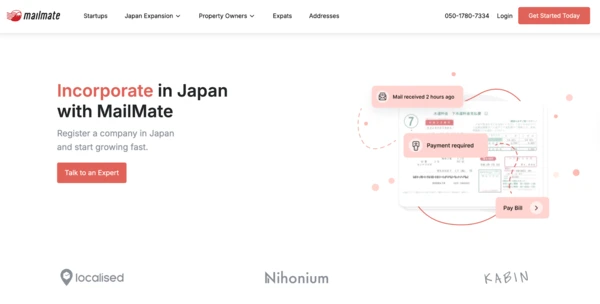
Mailmate's incorporation support + virtual mail services are a bilingual service for foreign entrepreneurs who want to start a business in Japan.
Incorporation support: MailMate helps with company registration applications, business addresses, and much more!
Japanese phone number service with bilingual receptionist: MailMate will answer incoming calls and relay the message to you.
Virtual mail service: MailMate receives your business mail at a virtual address, scans and uploads it to your dashboard, where you can read, forward, or request translation for Japanese documents.
Bill payment service: MailMate also offers a bill payment service and will pay it on your behalf by taking it to the local convenience store, so that you will never miss a payment.
MailMate has been helping entrepreneurs successfully start companies in Japan!

Step-by-step guide: How to start a franchise in Japan as a foreigner
Here is the step-by-step process on how to start a franchise business in Japan.
1. Understand the franchise model
2. Search & browse franchises
3. Contact a franchisor and request documents, sales forecasts, manuals, etc.
4. Visit their directly managed stores and franchised stores
5. Visit the franchisor company headquarters and participate in their franchise seminar and interview
6. Choose the right franchise that matches your skills, budget, and interests
7. Confirm if the location can serve as both a store and an office (required for the business manager visa)
8. Prepare your investment capital of a minimum of 30 million yen for the business manager visa
9. Secure a physical office/store (virtual offices are not accepted, and home-office setups are risky)
10. Consult legal and financial advisors, such as a legal expert or an administrative scrivener, to review the contract terms (Optional but highly recommended)
11. Establish a Kabushiki Kaisha (LLC) or Godo Kaisha (joint stock company)
👉Learn more about incorporation: Starting a Business in Japan: The Essentialist's Guide
12. Sign the franchise agreement (carefully double-check the royalty rates, support, territory, and termination before signing the contract)
13. Create a strong business plan including franchise brand info, financial forecast, and marketing strategy by using the franchisor's past performance and support systems as evidence
14. Apply for the business manager visa (Consult a licensed judicial scrivener for help with document preparation and submission to immigration)
👉Required documents:
Franchise contract & payment proof
Certified company registry
Business plan and financial documents
Proof of office/store lease
Bank statement showing capital
Visa application forms
15. Finalize interior setup and equipment installation, and hire staff, complete training with franchisor
16. Launch/open your franchise and start operations
Note: For obtaining the business manager visa, it is almost necessary to establish either Kabushiki Kaisha or Godo Kaisha, and not the sole proprietorship registration. In theory, obtaining a visa with being a sole proprietorship is possible, but it is difficult. Since the requirements for the business manager visa are credibility and sustainability, registering a company (Kabushiki Kaisha or Godo Kaisha) greatly increases your chances of your visa being approved. Additionally, a lot of franchise brands in Japan require or prefer franchisees to be registered as companies for clear legal responsibility, reliable contracts, and lower risk of disputes.
👉Read also: 【2025】The Real Cost of Starting a Business in Japan
How to choose the right franchise

Choosing the right franchisor is extremely important, especially for a foreign national, for obtaining the business manager visa.
Have the following criteria in mind:
The franchise business that fits your interests & skills
The owner only needs to do management tasks
The start-up cost & the monthly loyalty fee
The additional requirements & conditions for foreign owners
Comprehensive support & assistance by the franchisors regarding management
Support for the application & renewal
Suitable contract length
Contents of the franchise agreement
Points to learn from success & failure cases
Many successful foreign franchise owners in Japan understand the cultural differences and have strong relationships with local staff. On the other hand, others fail due to a lack of Japanese language skills or management experience.
For business success in Japan:
Understand & adapt to Japanese working culture
Respect business etiquette, hierarchy, & communication styles
Build trust with locals & the community over time
Hire Japanese staff who understand the market and consumers
Have bilingual or bicultural team members to help bridge gaps
Proper legal process, visa, and tax setup, avoid "shortcut" solutions
Customer-focused & consistent quality
👉Read also: Successful Foreign Companies in Japan: 3 Case Studies
Avoid:
Expecting flexibility or foreign business standards
Misinterpreting indirect communication or a lack of politeness
Not understanding how long trust-building & negotiation take
No localization & adaptation
Insufficient capital or poor cash flow planning
Underestimating the time to become profitable
Not maintaining visa status
Getting into legal disputes due to miscommunication and unclear contracts
👉 Learn about startups and Japan's tax laws here.
Also, try to avoid doing everything alone and reach out for professional help. Starting a business in Japan requires navigating a complicated process in the Japanese language, and could lead to potential problems.
👉Check out our list of English-speaking corporate lawyers here.
Who franchise opportunities in Japan are (and are not) right for
Not all franchise opportunities are suitable for every entrepreneur. For foreign nationals in Japan, success depends not only on capital and brand choice, but also on visa compliance, management structure, and long-term commitment.
Franchise opportunities in Japan are best for:
Long-term residents or investors planning to stay in Japan for several years
Management-focused entrepreneurs who oversee operations rather than perform daily labor
Founders with sufficient startup capital, including reserves beyond the minimum visa requirement
Business owners seeking a proven model with established branding and operational systems
Entrepreneurs comfortable hiring and managing local staff
Investors who value stability over rapid experimentation
These profiles align well with the Business Manager Visa requirements and with how most Japanese franchisors structure their operations.
Franchise opportunities in Japan may not be ideal for:
Solo operators intending to run the business alone
Hands-on workers (e.g., cooking, serving, repair work) rather than managers
Low-capital founders without financial buffers for slower-than-expected growth
Short-term residents or those seeking quick exits
Entrepreneurs expecting flexible contracts or informal business practices
Many visa rejections and franchise failures stem from a misalignment between expectations and Japan’s legal, cultural, and operational realities.
How to self-assess before choosing a franchise
Before committing to any franchise opportunity in Japan, ask yourself:
Can I operate strictly in a management role?
Do I have enough capital to sustain the business beyond year one?
Am I prepared to hire, train, and retain staff?
Do I understand the long-term visa and compliance obligations?
Does this franchise fit both my business goals and residency plans?
Answering these questions early helps filter out unsuitable opportunities and significantly increases the chances of long-term success.
Frequently Asked Questions (FAQ)

Here are the frequently asked questions regarding franchise opportunities in Japan.
Can a foreigner start a franchise business in Japan?
Yes, it is possible. However, you will need to obtain a business manager visa, which requires a physical office, a minimum of 30 million yen capital investment, and a solid business plan.
Do I need to establish a company when opening a franchise in Japan?
In most cases, yes. Sole proprietorships are technically allowed, but they are rarely approved for visa purposes. Additionally, many franchisors require company establishment for credibility and sustainability. It is common to establish a Kabushiki Kaisha (KK) or Godo Kaisha (GK) to increase your chance of visa approval and meet most franchisor requirements.
What kinds of franchise industries are popular in Japan?
Some of the most profitable franchises in Japan include:
Convenience stores (7-Eleven, Lawson, FamilyMart, etc.)
Cleaning & home services
Mobile-related shops (repair, sales agent, etc.)
Restaurants & fast food chains
Indoor gold simulators
Education & tutoring centers
Fitness gym & wellness studios
Elderly & disability care services
Pet-related businesses
Retail & miscellaneous services (Laundromat, repair shops, recycling, used goods, etc.)
Can I run the franchise by myself?
No, the business manager visa requires you to be the manager and not the worker. This means that you must hire staff. Visa applications for solo-run businesses like food trucks or food stall franchises are typically denied.
In closing: Is owning a franchise in Japan right for you?
There are many foreigners who successfully own businesses, including franchises, in Japan.
If you have a passion for business, are committed to long-term growth, patient & careful, and eager to engage with the Japanese market, a franchise business could be the right place for you to start.
If you are looking for the best franchise opportunity, it is a good idea to check out some of the top franchise companies in Japan. Many of them are backed by the world's largest franchise brands, which make them some of the best franchises to invest in for foreign entrepreneurs in Japan.
👉Read also:
Spending too long figuring out your Japanese mail?
Virtual mail + translation services start at 3800 per month. 30-day money-back guarantee.